
You might feel a deep sense of confusion when you look for a place that seems to vanish. It is very stressful to search for a dream spot only to find dead ends. I know how it feels when you see a beautiful name like Yukevalo Island and want to see it for yourself. You want to know if the stories are true or if you are chasing a ghost. It can be tiring to spend hours on maps without seeing a single clear answer.
Many people share this same frustration today. You are likely looking for a quiet escape from a busy, loud world. You want a place where the air is fresh and the water is blue. But the more you search, the more you might feel that someone is hiding the truth from you. This feeling of being lost in a mystery is exactly what I want to help you fix today.
In this guide, we will look at every detail behind the mystery of Yukevalo Island. We will talk about why it is so rare and why it stays hidden from most eyes. I will show you the real facts that sit behind the myths. By the end of this page, you will feel much more at ease. You will finally understand the logic of this rare place and feel confident in your knowledge.
The Struggle to Find Rare Islands in the Modern World
The world feels very small today because of the internet. We think we can see every beach and forest from our phones. This is why it feels so strange when a place like Yukevalo Island stays hidden. It creates a “map gap” that makes us feel uneasy. You might wonder if your maps are broken or if the island is a secret kept by a few.
The truth is that our oceans are still very big and very deep. There are thousands of small spots of land that do not have big hotels or airports. These places are rare because they do not want to be found by everyone. They stay quiet to protect their trees, birds, and way of life. When you look for this island, you are looking for one of the last true secrets left on earth.
How Names Can Hide the Truth from You
One of the biggest hurdles in your search is the way we use words. A name like Yukevalo Island might not be the official name used by world governments. Often, a place has a “home name” used by the people who live there for thousands of years. Then, it has a “map name” given by explorers hundreds of years ago.
If you only use one name, you might never find the right spot. This is a very common problem for travelers and researchers. It is like looking for a person by their nickname when the phone book uses their real name. To find the truth, we have to look at how different languages describe the same piece of land in the sea.
The Science of Islands That Appear and Disappear
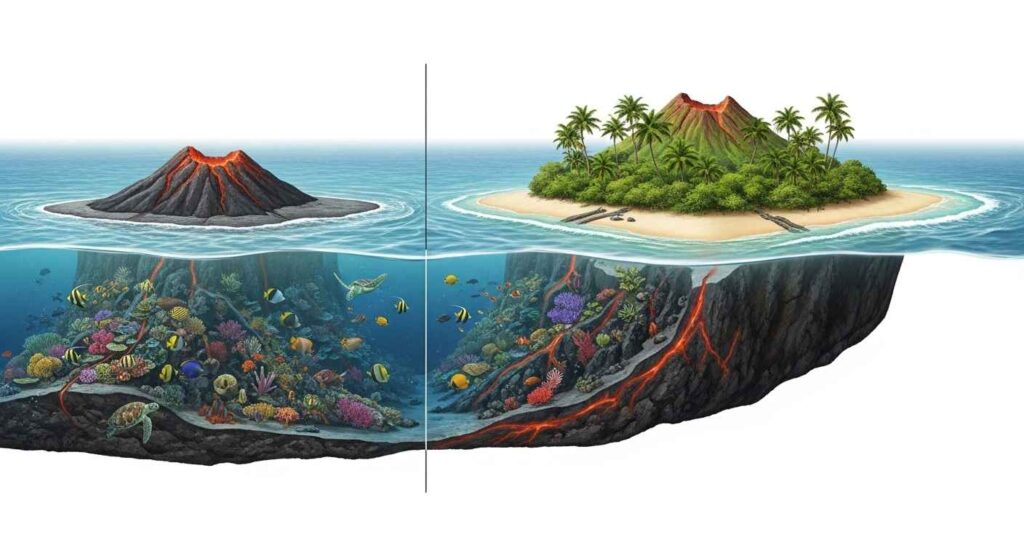
You might have heard myths about islands that sink or rise from the waves. This sounds like a fairy tale, but it is actually a real fact of nature. Some islands are made of volcanic rock. They can rise up quickly when the earth moves. Other islands are made of soft coral and sand. These can wash away during big storms and then come back years later.
This “ghost” nature of land makes it hard to keep maps perfect. If an island was seen in 1920 but was underwater in 1950, a map maker might take it off the list. If it comes back in 2026, it becomes a “rare” find once again. This cycle of nature is one reason why the truth about these places feels so hard to grab.
Hidden Realities of the South Pacific Region
When we talk about rare islands, we must look at the Pacific Ocean. This area is home to the most remote spots on the planet. Many of these islands are so low that they look like a thin line on the horizon. If you are on a boat just a few miles away, you might miss them completely.
The people living in these areas have a deep bond with the sea. They do not see the ocean as a wall. They see it as a path. They have known about “hidden” spots for a very long time. What we call a “mystery” or a “rare find,” they call home. Understanding this local view helps us see why some names do not show up on our global search tools.
Why Small Atolls are the Rarest Gems
An atoll is a very special kind of island. It is shaped like a ring with a calm pool of water in the middle. This pool is called a lagoon. These are the most fragile and rare places in the world. They are not made of hard stone. They are made of living coral.
Because they are so fragile, they cannot handle big crowds of people. They stay rare because they have to. If too many people go there, the island can actually break. This is why some spots stay off the map on purpose. It is a way to save the land from being stepped on too much.
The Role of Legend in Keeping a Place Rare
Stories and myths are like a shield for rare places. When people hear a myth about a “forbidden” or “secret” island, they often stay away. This keeps the place safe from the modern world. Myths tell us about spirits or ancient kings who guard the sand.
These stories are not just for fun. They carry the history and the rules of the land. For Yukevalo Island, the legends might be a way of saying that the place is too special for a normal visit. The rare nature of the island is built into the songs and tales of the region.
Comparing Global Names and Local Secrets
Sometimes, a name is born from a mistake. Long ago, a sailor might have written down a name he heard but spelled it wrong. This “wrong” name then travels around the world. Meanwhile, the real island is sitting in the ocean with a totally different name.
This creates a split in the truth. One truth lives in books, and one truth lives in the water. To solve the puzzle, you have to be a bit of a detective. You have to look for the roots of the word. Often, the “rare” name we search for is just a beautiful echo of a real place that is already there.
Protection of Rare Ecosystems
We must talk about the birds and fish that live in these hidden spots. Many rare islands are the only place where a certain bird can lay its eggs. If humans go there, the birds might leave and never come back. This makes the island a “nature vault.”
To keep these animals safe, many countries do not put these islands on tourist maps. They keep the facts hidden to protect the life that lives there. This is a very good reason for a place to stay rare. It is not about keeping secrets from you; it is about keeping a home safe for nature.
How to Find Peace with a Mystery
It is okay if you do not have a GPS point for every name you hear. Part of the joy of the world is that it still has secrets. If we knew everything, there would be no room for wonder. The rare nature of a place like Yukevalo Island gives us something to dream about.
Instead of feeling frustrated, try to feel inspired. The fact that you are searching shows that you have a heart for adventure. You are a person who looks for more than what is right in front of them. That is a great way to live.
Learning from the People of the Sea
The elders in the islands have a lot of wisdom about hidden land. they say that you do not find the island; the island finds you. This means that when you are ready to see the truth, it will appear. This is a very calm way to look at a mystery.
They use the stars and the flight of birds to find land. They do not need a computer screen. By learning about their way of life, we can understand how a place can be both “hidden” and “known” at the same time. This is the key to the Yukevalo Island truth.
The Impact of Rising Seas on Rare Places
We cannot ignore that many rare islands are in danger. Because they sit so low in the water, the rising sea is a big threat. Some islands that were on the map ten years ago are now gone. This makes them even rarer than they were before.
This is a sad truth, but it is one we must face. It teaches us to value what we have right now. If a place is rare, it is precious. We should treat every bit of island news with respect because it might not be there forever.
Why Human Curiosity Drives the Myth
We love stories about hidden places because they represent a fresh start. We imagine a place where we can leave our worries behind. This human need for a “secret world” is why names like this become so popular online. We want to believe there is a door we haven’t opened yet.
The myth grows because we feed it with our hopes. Even if the island is just a small reef, in our minds, it becomes a grand kingdom. This is the power of the rare. It turns a simple fact into a beautiful dream that keeps us searching.
The Logic of Discovery in 2026
Finding a rare island today takes more than a boat. it takes a lot of research. You have to look at old sea charts and compare them to new satellite images. You have to look for “irregular” patterns in the waves. Often, the waves will break in a certain way over a hidden island.
This is the logical way to find the “invisible.” It turns the search from a stressful guess into a smart plan. When you use logic, the frustration goes away. You start to see the ocean as a giant book that you are learning to read.
Keeping the Spirit of Exploration Alive
The world needs more people who ask big questions. Even if a name leads to a myth, the act of looking is what matters. It keeps our minds open to the beauty of the earth. The search for the rare is what has driven humans to cross every ocean.
So, do not give up on your love for the rare. Let the mystery of the island lead you to learn about new cultures, new science, and new ways of seeing the world. The “truth” is often much bigger than just a spot of land.
You May Also Like: Panyrfedgr-FE92PA Secrets Experts Don’t Want You to Know
Final Thoughts on the Hidden Truth
We have looked at many sides of the Yukevalo Island mystery. We saw how names can change and how nature can hide land in the waves. We talked about why it is important to protect rare spots and why our hearts love a good story.
You should feel much better now. You know that the rarity of the island is what makes it special. You know that if you can’t find it easily, it is because it is being kept safe or it is waiting for the right moment. The confusion you felt at the start is now replaced with a deep understanding of how our world works.
Frequently Asked Questions About Rare Islands
Why do some islands not show up on online maps?
Many online maps focus on places where people live or where businesses are. If an island is very small, has no buildings, or is part of a protected zone, it might be left off. Sometimes, the scale of the map is too big to show a tiny atoll.
Can an island really disappear and then come back?
Yes, this is very common in volcanic areas. New land can be pushed up by heat from under the earth. Also, sand islands can be covered by high tides or storms and then reappear when the weather changes or the sand shifts back.
Is it possible to visit these rare and hidden locations?
Most rare islands are very hard to reach. They do not have runways for planes or docks for big ships. You would need a private boat and a lot of skill. Also, many are protected by law, and you might need special permission to step on the sand.
What is the best way to find the real name of a rare island?
The best way is to look at local charts from the nearest big country. Local people usually have the oldest and most accurate names. You can also search for the “native name” of a region to find titles that are not used in English.
Why are people so interested in myths like Yukevalo Island?
Humans have a natural love for mystery. A hidden island represents a place that is pure and untouched. It gives us a sense of wonder and makes the world feel bigger and more exciting than our daily lives.
Disclaimer
This article is for informational purposes only. The information regarding “Yukevalo Island” is based on cultural myths, digital trends, and historical sea legends. We do not claim this location is a recognized geographical entity on modern official maps. Travel to remote regions carries risks and requires expert planning. Always verify land status and local laws before exploring. We are not liable for actions taken based on this content.

Joseph Quinn is a writer and digital creator best known as the founder of FreakBobTime. With years of blogging experience, he blends technology, culture, and internet humor into unique stories and creative experiments. Through his work, Joseph brings back the playful, weird side of the web while making content that connects with readers worldwide.