
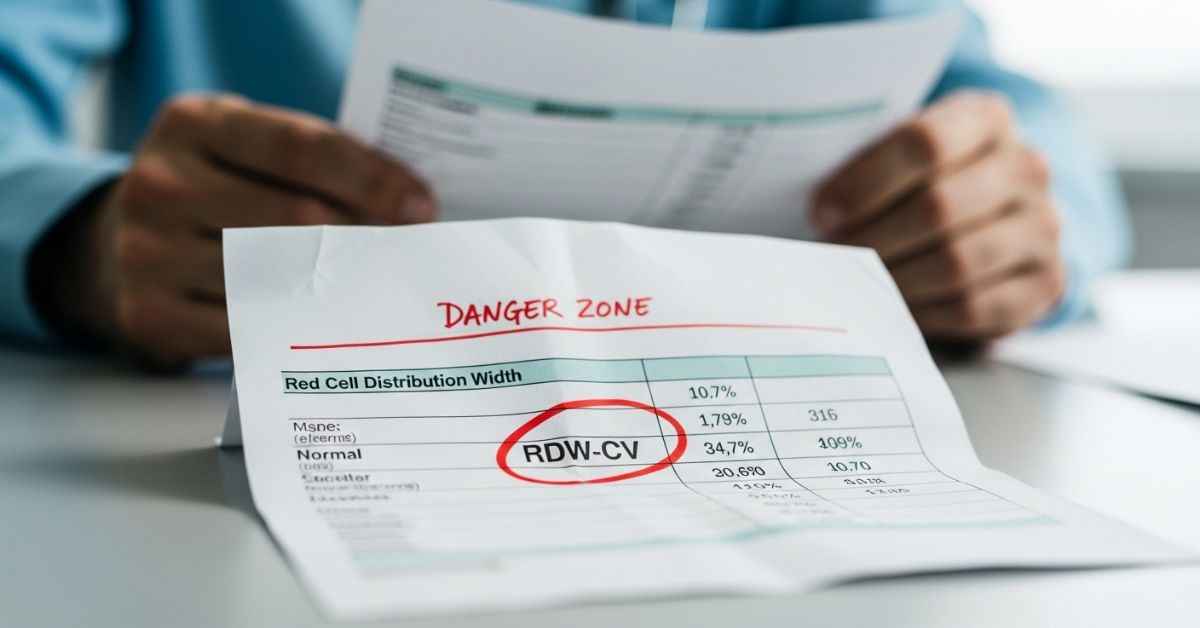
Finding out you have a high RDW result can feel like a heavy weight on your chest. You might stare at your lab report and wonder if your heart is failing or if something is deeply wrong inside. It is normal to feel scared when medical terms seem like a secret code you cannot crack. You likely want to know if you are in immediate danger or if this is something that can be fixed with a simple change.
I understand how frustrating it is to feel like a number on a page instead of a person. Many people leave the doctor’s office feeling more confused than when they arrived. You deserve to know exactly what is happening in your body without the confusing medical jargon. This guide will help you understand your blood health so you can replace that worry with a clear plan of action.
We will explore what level of RDW is dangerous and how it impacts your daily energy. You will learn the difference between a minor fluctuation and a serious health warning. By looking at the facts, you can stop fearing the “what ifs” and start focusing on your recovery.
Understanding What RDW Really Means for Your Body
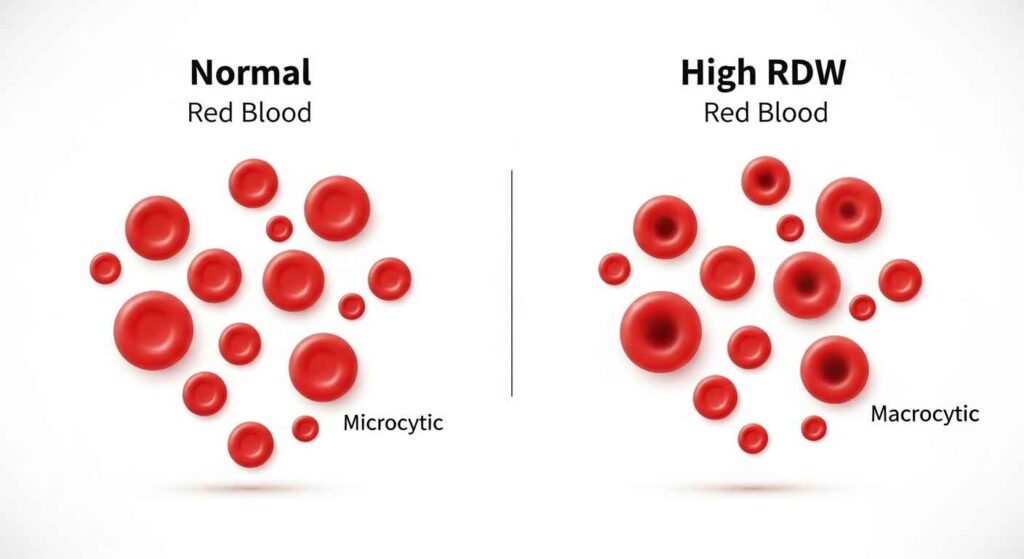
RDW stands for Red Cell Distribution Width. It measures the variation in the size of your red blood cells. Your red blood cells have a very important job. They carry oxygen from your lungs to every part of your body. To do this job well, they should all be roughly the same size and shape. This allows them to flow smoothly through your tiny blood vessels.
Think of your red blood cells like a fleet of delivery trucks. If all the trucks are the same size, they move through traffic at the same speed. If some trucks are tiny cars and others are massive semi-trailers, the traffic becomes messy. A high RDW means your “delivery fleet” is inconsistent. Some cells are too big, and some are too small. This inconsistency is a signal that your bone marrow is struggling to produce healthy, uniform cells.
How to Know What Level of RDW Is Dangerous for Your Specific Health
When you look at your results, you will see a percentage. A normal result is usually between 11.5% and 14.5%. When the number climbs above this range, it indicates that your cells are becoming uneven. However, the term “dangerous” is relative to how high the number goes and your overall health history.
Mildly Elevated RDW Levels
A result between 14.6% and 18% is considered mildly high. For many people, this is a “yellow light” warning. It often suggests the very beginning of a nutrient deficiency. You might not even feel symptoms yet. At this stage, the level is not dangerous, but it is a sign that you should check your iron and vitamin levels. Ignoring this range could lead to more serious issues later.
Moderately High RDW Levels
When your RDW reaches between 18% and 26%, it becomes more significant. This level usually means your body is actively struggling. You might feel very tired or get out of breath just walking up the stairs. This range often points to established anemia or chronic inflammation. While not a sudden emergency, it requires a doctor to find the cause quickly to prevent organ strain.
High Risk Severely Elevated RDW
An RDW level above 26% is quite high and can be considered a dangerous red flag. At this level, your red blood cells are extremely varied in size. This can be seen in serious conditions like bone marrow disorders or advanced liver disease. If your number is in this range, it is vital to have a deep medical investigation. It shows that your body’s blood-building system is under extreme pressure.
Why High RDW Is a Warning Sign for Heart Health
Doctors now use RDW for more than just checking for anemia. Recent medical studies show that high RDW is a strong predictor of heart health issues. When your RDW is high, it often means there is high inflammation in your body. Inflammation acts like a slow fire that can damage your heart and blood vessels over time.
If you already have a heart condition, a rising RDW can be a sign that your heart is working too hard. It helps doctors see if a treatment is working or if they need to change your care plan. A high RDW is not a cause of heart disease, but it is a very reliable messenger. It tells the doctor that the body is under stress, allowing them to intervene before a crisis happens.
Common Reasons Your RDW Level Is Rising
There are many reasons why your red blood cells might vary in size. Knowing the cause helps remove the fear of the unknown. Most causes are things that your doctor can help you manage or cure.
Iron Deficiency Anemia
This is the most frequent cause of a high RDW. Your body needs iron to make hemoglobin, which is the part of the cell that carries oxygen. If you do not have enough iron, your body starts making smaller red blood cells. Because you still have some old, normal-sized cells in your blood, the “width” or variation increases. This makes your RDW number go up.
Vitamin B12 and Folate Deficiencies
While a lack of iron makes cells small, a lack of B12 or folate makes them too large. These large cells are called macrocytes. Just like with iron deficiency, having these giant cells mixed with normal cells creates a high RDW. This is common in people with certain diets or those who have trouble absorbing nutrients in their gut.
Chronic Kidney and Liver Disease
Your kidneys produce a hormone called erythropoietin. This hormone tells your bone marrow to make more red blood cells. If the kidneys are not healthy, the signal gets weak or confused. The liver also plays a role in storing vitamins and clearing toxins. When these organs struggle, your blood production becomes inconsistent, leading to a higher RDW.
How Inflammation Impacts Your Blood Test Results
Inflammation is your body’s response to injury or infection. However, long-term inflammation can interfere with how your body uses iron. It can also shorten the lifespan of your red blood cells. When red blood cells die too early, the bone marrow tries to replace them too fast. This rush leads to cells that are not shaped correctly, which raises your RDW.
Chronic conditions like rheumatoid arthritis, lupus, or even long-term stress can cause this. This is why a high RDW is often seen in people who feel “generally unwell” but do not have a specific diagnosis yet. It is the body’s way of showing that it is fighting an internal battle.
Distinguishing Between High RDW and Anemia
Many people think high RDW and anemia are the same thing, but they are different. Anemia means you do not have enough healthy red blood cells or hemoglobin. RDW measures the size variation of the cells you do have. You can have a high RDW even if your total blood count is still in the normal range.
This is actually very helpful for early detection. A high RDW can show up months before your hemoglobin levels drop. It is like a “check engine” light that comes on before the car actually breaks down. Finding a high RDW early gives you a chance to fix your diet or lifestyle before you become truly anemic.
Lifestyle Changes to Help Balance Your RDW
If your RDW is high due to lifestyle factors or nutrition, you have the power to change it. Your blood cells live for about 120 days. This means that the changes you make today will start to show up in your blood tests in about three to four months.
Improving Nutritional Intake
Focus on a diet that supports blood health. Red meats, poultry, and seafood are excellent sources of heme iron, which your body absorbs easily. If you prefer plant-based foods, lentils, beans, and fortified grains are great options. Pair these with Vitamin C, like orange juice or bell peppers, to help your body take in the iron better.
Managing Chronic Stress and Sleep
Sleep is when your bone marrow does its best work. If you are constantly stressed or sleep-deprived, your body produces more cortisol. High cortisol can lead to inflammation, which we know raises RDW. Making time for rest is not just about feeling better; it is about giving your blood-building system the time it needs to produce uniform, healthy cells.
Reducing Alcohol and Smoking
Alcohol can be toxic to your bone marrow and interferes with the absorption of folate. Smoking reduces the amount of oxygen your blood can carry, forcing your body to churn out cells more rapidly. By cutting back on these habits, you reduce the “noise” in your system, allowing your body to create more consistent red blood cells.
When to Seek Urgent Medical Advice
While an RDW level is rarely a “right now” emergency, it should never be ignored. You should talk to a professional to see how your RDW fits into the bigger picture of your health. They will look at your MCV (Mean Corpuscular Volume) to see if your cells are generally too small or too large.
Seek a doctor’s advice immediately if your high RDW is accompanied by extreme paleness, a very fast resting heart rate, or feeling like you might faint. These are signs that your body is struggling to get enough oxygen to your brain and heart. Most of the time, the solution is as simple as a supplement or a change in medication, but you need an expert to guide you.
The Role of Genetics in RDW Levels
Sometimes, a high RDW is not about what you eat or how you live. Some people have genetic traits that cause their blood cells to be different shapes. Conditions like Thalassemia can cause a lifelong high RDW. In these cases, the high number might be “normal” for that specific person. This is why it is so important to look at your past lab results. If your RDW has always been a little high and you feel fine, it may just be how your body is built.
You May Also Like: Shocking Secrets of MrWatson1911 Revealed – What Everyone’s Hiding!
Moving Forward with Confidence
Understanding your RDW level is a powerful way to take charge of your health. It is not a scary number when you know it is just a tool for your doctor. By identifying the root cause—whether it is a lack of vitamins, a need for more rest, or managing a chronic condition—you can bring your body back into balance.
You no longer have to wonder “what level of RDW is dangerous” without an answer. You know that while high numbers are a signal for help, they are usually something you can manage with the right care. Take your results to your doctor, ask about your iron and B12 levels, and trust that you are on the path to feeling strong and energetic again.
Common Questions About RDW Levels
At what level of RDW is dangerous enough to cause permanent heart damage?
The most frequent cause is a lack of iron. When iron is low, your body cannot make red blood cells that are the correct size. This creates a mix of small and normal cells, which increases the RDW percentage.
Can stress cause my RDW to go up?
Yes, long-term stress can raise RDW. Stress causes inflammation in the body. This inflammation can interfere with how your bone marrow produces blood cells, leading to more variation in their size.
Is high RDW a sign of cancer?
A high RDW is usually not a sign of cancer. It is most often caused by simple things like vitamin deficiencies. However, in some cases, it can be a marker for bone marrow issues, so it is always best to have a doctor check your full blood count.
How long does it take for RDW levels to return to normal?
It usually takes about three to four months. This is because red blood cells live for about 120 days. Once you start treatment, like taking iron, your body needs time to replace the old, uneven cells with new, uniform ones.
Should I worry if my RDW is high but my other levels are normal?
You should not panic, but you should pay attention. A high RDW with normal hemoglobin often means you are in the early stages of a nutrient deficiency. It is the best time to take action before you start feeling sick.
Disclaimer:
This article is for informational purposes only and does not constitute medical advice, diagnosis, or treatment. RDW levels can be influenced by various health factors and should always be interpreted by a qualified healthcare professional in the context of a full Complete Blood Count (CBC). Never disregard professional medical advice or delay seeking it because of something you have read here. Use of this information is at your own risk.

Joseph Quinn is a writer and digital creator best known as the founder of FreakBobTime. With years of blogging experience, he blends technology, culture, and internet humor into unique stories and creative experiments. Through his work, Joseph brings back the playful, weird side of the web while making content that connects with readers worldwide.