
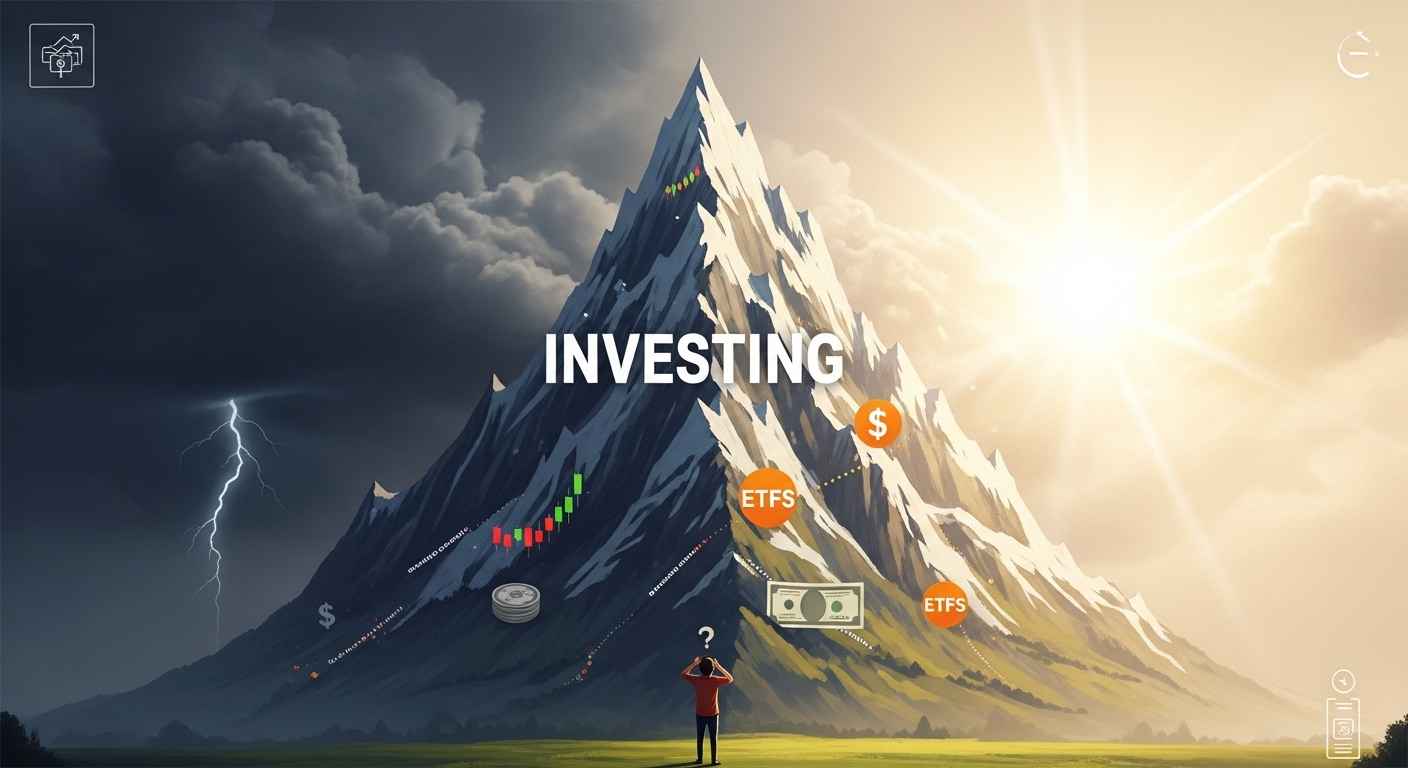
Starting to invest often feels like standing in front of a giant mountain. You know the top is beautiful, but the path up looks scary and confusing. Many people feel frozen because they are afraid of losing their hard-earned money. You might worry that you do not have enough cash to start. You might feel like the stock market is a club where you are not invited. These fears are real and very common.
The truth is that most people wait too long to start. They think they need to be experts first. This waiting actually costs more money than a small mistake would. If you are feeling overwhelmed by all the charts and numbers, you are not alone. The goal of these tips is to clear the fog. We want to take that stress away and show you a simple way to build wealth.
You do not need a million dollars to be an investiit.com tips. You just need a plan that works while you sleep. By the end of this guide, you will see that maximizing your returns is about making smart habits, not guessing the future. Let’s look at how you can turn your confusion into a solid financial foundation.
Build Your Safety Net First
Before you put a single dollar into a stock, you must protect yourself. Imagine trying to build a house on sand. It will fall down when the wind blows. Your financial house needs a floor of rock. This rock is made of two things: an emergency fund and zero high-interest debt.
Most pros say you should have three to six months of living costs in a bank account. This money is not for investing. It is for when the car breaks or the roof leaks. If you use your investment money for emergencies, you might have to sell your stocks when they are down. That is how people lose money.
Also, look at your credit cards. If you owe money at a 20% interest rate, paying that off is the best investment you can ever make. No stock can promise a 20% gain every year. By paying off that debt, you “earn” that 20% back instantly. Once your debt is gone and your safety fund is full, you are ready to grow.
Use the Power of Time and Compounding
One of the most shocking tips is that time matters more than timing. Many people try to “buy low and sell high” by guessing when the market will crash. Even the smartest experts fail at this. Instead, pros use something called compound interest. This is when your money earns money, and then that new money earns even more money.
Think of it like a snowball rolling down a hill. At first, it is small. As it rolls, it picks up more snow. By the bottom, it is huge. The longer the hill, the bigger the snowball. This is why starting today with $50 is better than starting in ten years with $500.
To make this work like a pro, you should automate your savings. Set your bank to move a small amount of money into your investment account every payday. This removes the stress of deciding when to buy. You simply buy all the time. When prices are high, you buy less. When prices are low, you buy more. This is called dollar-cost averaging.
Choose Simple Diversified Funds investiit.com Tips
You might think you need to find the “next big stock” to get rich. This is a very dangerous trap. Picking one company is like betting on one horse in a race. If that horse trips, you lose everything. Pros do not bet on one horse. They bet on the whole track.

You can do this easily with Exchange-Traded Funds or ETFs. An ETF is like a basket that holds hundreds of different stocks. If you buy an S&P 500 ETF, you own a tiny piece of the 500 biggest companies in America. If one company does poorly, the others can still go up. This keeps your money much safer.
Low-cost index funds are the secret weapon of wealthy people. They have very low fees, which means more money stays in your pocket. Over many years, high fees can eat up half of your total wealth. Always check the “expense ratio” of a fund. You want this number to be as low as possible, usually below 0.10%.
Master Your Own Emotions
The biggest hurdle in investing is not the market. It is the person in the mirror. When the news says the market is crashing, most people feel a deep urge to sell. This is a basic human instinct called fear. But in the world of money, fear is very expensive.
Pros know that markets go up and down. They expect the “red days” and do not panic. In fact, when the market goes down, pros see it as a sale. They get to buy more of those great companies at a lower price. If you can stay calm while others are screaming, you will win in the long run.
A great tip is to stop checking your account every day. If you are investing for twenty years, what happens today does not matter. Checking too often leads to making bad, emotional choices. Check your plan once every few months instead. This simple habit will protect your peace of mind and your wallet.
Maximize Your Tax Breaks
Did you know the government offers special accounts to help you save? In the United States, these are things like 401(k) plans and IRAs. Using these is like getting a head start in a race. They either let you invest before you pay taxes or let you take your money out tax-free later.
If your job offers a 401(k) match, that is free money. If they match 3% of your pay, and you do not take it, you are throwing away a part of your salary. Always contribute enough to get the full match. It is a 100% return on your money on day one.
Also, think about a Roth IRA. With this account, you pay taxes now, but you never pay taxes on the growth ever again. If your $5,000 grows into $50,000 over thirty years, you keep every penny of that profit. Understanding these tax rules is a pro move that can save you six figures over your lifetime.
Keep Your Strategy Simple
Complexity is the enemy of execution. Many people think they need a complex strategy with many moving parts. This usually just leads to more mistakes and higher fees. The best investors keep things very simple. They own a few broad funds, keep their costs low, and stay patient.
As you grow your wealth, you might be tempted by “hot tips” or new trends like certain digital coins. Be very careful. If something sounds too good to be true, it probably is. Stick to the things that have worked for over a hundred years: owning good businesses and letting time do the work.
Your investment plan should be so simple that you can explain it to a child. “I buy a piece of every big company every month, and I never sell.” That simple logic has created more millionaires than any complex trading system ever will.
Review and Rebalance Your Path
Even though you should not check your account every day, you should check it once a year. Over time, some of your stocks might grow faster than others. This can make your portfolio “unbalanced.” For example, you might start with 80% stocks and 20% bonds, but after a good year, you might have 90% stocks.
Rebalancing means selling a little bit of what went up and buying what is currently lower. This sounds backwards, but it is actually a way to “sell high and buy low” automatically. It keeps your risk level exactly where you want it. It ensures that you are never taking more risk than you can handle.

Remember, the goal of these tips is to give you a life of freedom. Money is just a tool. When you use these pro strategies, you stop working for your money and your money starts working for you. This transition is the key to true wealth.
You May Also Like: Pimslapt2154 EXPOSED: What Smart Users Must Know Today
Conclusion and Final Relief
Investing does not have to be a source of stress. The shocking truth is that the most successful investors are often the ones who do the least. By setting up a solid safety net, using simple funds, and staying patient, you are already ahead of 90% of other people. You have solved the riddle of how to grow your wealth without losing your sleep.
The path to maximizing returns is now clear. You know how to avoid the high fees that steal your future. You know how to ignore the scary news and focus on your long-term goals. Most importantly, you know that you are capable of doing this. You don’t need to be a math genius or a Wall Street pro. You just need the discipline to start and the wisdom to stay the course.
FAQS
How much money do I need to start investing?
You do not need a large sum of money to begin your journey. Many modern platforms allow you to start with as little as $5 or $10. The most important factor is starting early rather than starting with a lot. Small amounts invested regularly grow quickly thanks to the power of compounding.
What is the safest way for a beginner to buy stocks?
The safest approach for most beginners is buying low-cost index funds or ETFs. These funds spread your money across hundreds of different companies at once. This way, if one company has a bad year, your entire savings are not at risk. It provides instant diversification which is a key rule for pros.
Should I pay off my debt before I start investing?
You should prioritize paying off high-interest debt like credit cards first. Credit card interest rates are often much higher than the returns you would get from the stock market. Paying off a card with 20% interest is like getting a guaranteed 20% return on your money. Once your high-interest debt is gone, you can invest more effectively.
How often should I check my investiit.com tips portfolio?
Checking your accounts every day can lead to stress and poor emotional choices. Professional advice suggests reviewing your plan once every three months or even once a year. This helps you stay focused on your long-term goals instead of worrying about small daily price changes.
What happens to my money if the stock market crashes?
If the market crashes, the value of your shares goes down on paper, but you only lose money if you sell. Markets have historically recovered and reached new highs over time. By staying patient and not selling during a dip, you give your investments the chance to grow back and move even higher.
Disclaimer
The information provided in this article is for educational and informational purposes only. It should not be considered professional financial, legal, or tax advice. Investing involves risk, including the possible loss of principal. We recommend consulting with a certified financial advisor or professional before making any major investment decisions. Past performance does not guarantee future results. Use these tips at your own discretion.

Joseph Quinn is a writer and digital creator best known as the founder of FreakBobTime. With years of blogging experience, he blends technology, culture, and internet humor into unique stories and creative experiments. Through his work, Joseph brings back the playful, weird side of the web while making content that connects with readers worldwide.